Iran's Clergy Problem Is 500 Years Old
There’s a popular version of Iranian history that goes like this: the Shah was in charge, then in 1979 the mullahs took over, and now we’re stuck with them. It’s clean, it’s simple, and it’s mostly wrong.
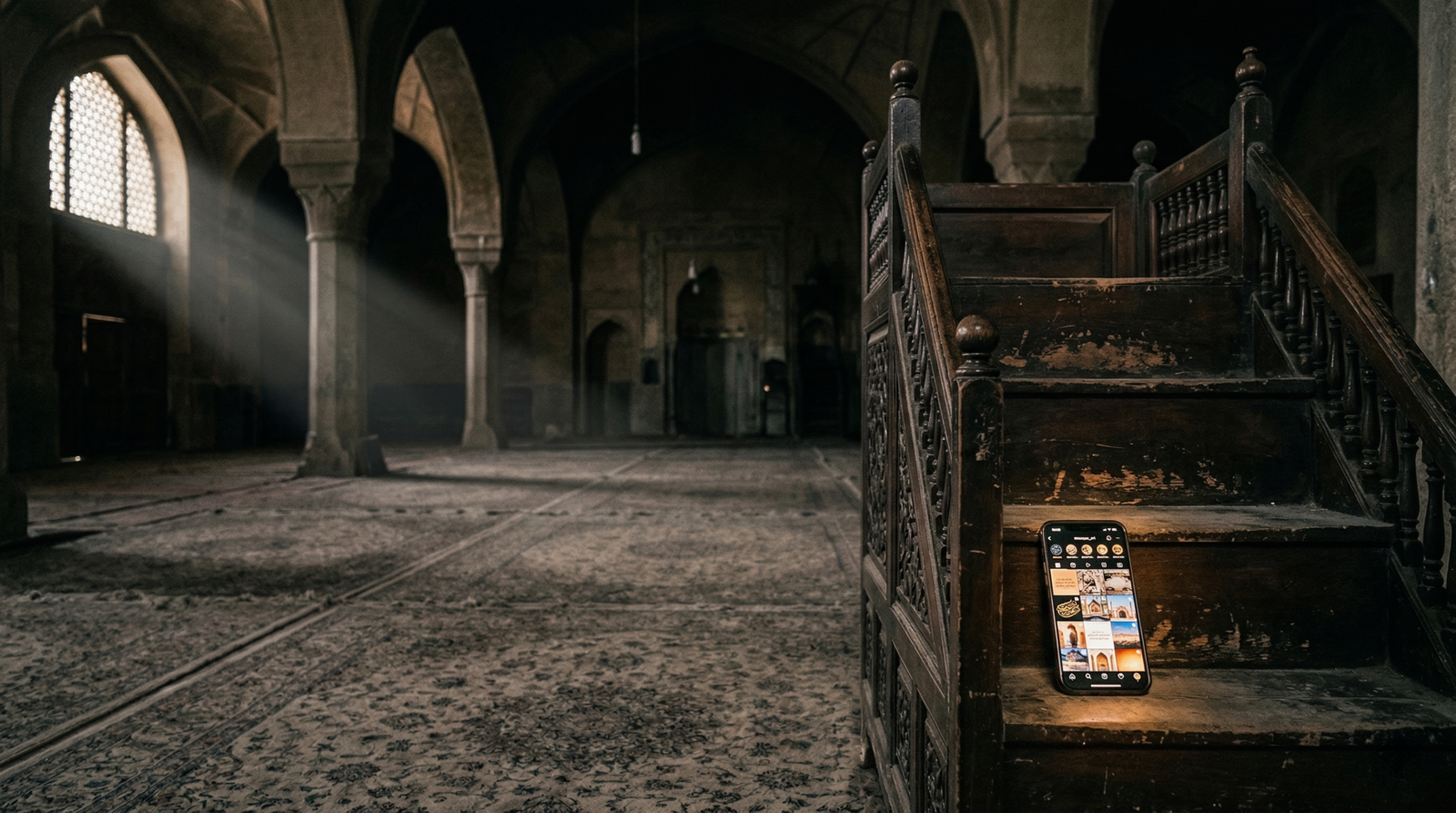
The clerics didn’t parachute into power 47 years ago. They’ve been a structural force in Iranian politics for centuries. At minimum two hundred years, probably more like five hundred, going back to when the Safavids forcibly converted the country to Twelver Shia Islam in 1501. The 1979 revolution didn’t create clerical power in Iran. It just gave it a flag and a constitution.
The Triangle
To understand why, you have to understand the power structure of pre-revolution Iran. From the Qajar dynasty (1796-1925) onward, there were three dominant factions that actually ran the country regardless of who sat on the throne: the bazaaris (merchants), the landowners, and the ulama (clergy). This triangle of power is well documented by historians of the period.
The merchants were the middle class. The landowners were the aristocracy. And the mullahs? They represented the mustazafin, a Quranic term that doesn’t quite mean “the poor” the way we’d use it. It means “the weakened” or “the oppressed,” people who’ve been made powerless by an unjust system. It’s a political word, not just an economic one. Khomeini later weaponized it as an Islamic substitute for Marxist class language: mustazafin versus mustakbirin (the arrogant oppressors) instead of proletariat versus bourgeoisie.
The monarchy sat on top of this triangle but couldn’t actually ignore any of these three groups. There was a parliament on paper after the Constitutional Revolution of 1906, but real power was distributed informally among these factions. The bazaaris funded the clergy. The clergy provided moral authority and mass mobilization. The landowners had economic leverage. It was an ecosystem, not a hierarchy.
How the Shah Accidentally Built the Revolution
Here’s what’s genuinely interesting about the story. The Pahlavis didn’t lose power because they ignored modernization. They lost it partly because of how they modernized.
Reza Shah centralized everything. He created state monopolies over sugar, tea, tobacco, and opium, cutting the bazaaris out of their most profitable trades. He introduced secular courts and secular education, eroding the clergy’s social role. He banned the veil. He broke the autonomy of tribal leaders and landed elites, concentrating power in the crown. All of this made sense as a modernization program. It also made enemies of every faction that mattered.
His son, Mohammad Reza Shah, went further. The White Revolution of 1963 redistributed land from roughly 2.5 million landlord families to peasants. On paper, morally correct. In practice, it nuked the landowner class as a political force without building anything to replace it. The former peasants didn’t get adequate support to actually farm productively, so millions migrated to cities where they became an urban underclass. And who was waiting for them in the cities? The mullahs, running mosques that doubled as schools, community centers, and welfare offices.
The land reform is one of those policies that historians look back on and go “well, that was clearly going to backfire.” You wiped out one leg of the power triangle (landowners), weakened another (bazaaris through state monopolies), and accidentally supercharged the third (clergy, whose constituency just got massively enlarged by displaced rural poor flooding into cities).
There’s an obvious objection here: if the Shah successfully removed the landowner class, why can’t someone remove the clergy? The difference is what their power rests on. You can redistribute land. You can nationalize trade routes. You can’t redistribute belief. The landowners’ power was material, and material power can be seized by decree. The clergy’s power was ideological and institutional, embedded in every mosque, every seminary, every funeral and wedding ceremony. Destroying it requires replacing not just a power structure but an entire social infrastructure. Nobody has managed that yet.
The Mosque as a Platform
The mullahs had something the other two factions never did: a scalable propaganda infrastructure.
Every town had a mosque. Every mosque had a cleric. Every cleric was delivering roughly the same message, drawn from a unified theological framework, Sharia and Islamic jurisprudence. You didn’t need to micromanage it. The ideology was self-distributing. In a country where large portions of the population were illiterate, the mosque was the primary information network. It was where people learned to read, where they got community support, where they heard about what was happening in the world.
Think of it this way: in 2020s America, Joe Rogan can have a guest on his podcast and shift election outcomes. C-SPAN plays Congressional hearings and nobody watches. The mosque network in pre-revolution Iran was the Rogan equivalent. The Shah’s state media was C-SPAN. The asymmetry was massive, and the government never figured out how to compete with it.
The clergy also cultivated a specific persona. They deliberately juxtaposed themselves against the merchants and landowners: we don’t care about material wealth, we represent the common people, come to us because we have nothing to gain. This wasn’t entirely sincere (it turned out not to be sincere at all), but it was effective. When you’re a peasant who just got land from the Shah’s reform but can’t actually make a living off it, the guy at the mosque who says “the material world doesn’t matter, God will provide” is more comforting than the government bureaucrat telling you to fill out forms.
Khomeini’s Shrewd Positioning
Khomeini spent 14 years in exile. Thirteen of those were in Najaf, Iraq, where he laid the theological groundwork for his vision of Islamic governance. The final four months were in Neauphle-le-Chateau, France, which gets all the attention because it gave him access to international media, telephones, and cassette tape distribution networks. But the thinking was done in Iraq.
From exile, Khomeini did something clever. His natural base was the mustazafin, the oppressed. That positioning made Western observers nervous about socialist or communist leanings. But Khomeini was vocally anti-communist. He blasted Marxism consistently, defended private enterprise, and in a 1989 letter to Gorbachev wrote what turned out to be one of the more prescient lines of Cold War commentary: “It is clear to everyone that Communism should henceforth be sought in world museums of political history.” The Soviet Union dissolved two years later.
His anti-communism wasn’t just ideological; it was strategic. If the clerics were going to consolidate the triangle, absorbing the merchant and landowner constituencies under Islamic governance, they couldn’t be a one-class movement. They needed to credibly appeal to capital-holders too. Free market under Islamic principles, not redistribution. The message was: we’re not communists, we’re not capitalists, we’re a third way.
Whether they ever actually won over the upper classes is debatable. I’d say no. But they understood they had to try.
The Economic Kindling
The pre-revolution economy wasn’t in hyperinflation, but what happened was arguably worse in psychological terms. Through the 1960s, inflation sat at near-zero, averaging around 1-2%. Then the oil boom hit in the early 1970s, and by 1977 it had spiked to roughly 25%. That’s a tenfold-plus increase in the rate within a few years (source: Trend of Inflation in Iran 1961-2007, ResearchGate).
25% inflation isn’t catastrophic on its own. What made it devastating was context. The oil boom created visible, obscene wealth concentration at the top while purchasing power stagnated for everyone else. When your neighbor is driving a Mercedes because he’s connected to the Shah’s court and you can’t afford bread, 25% inflation feels a lot worse than the number suggests. And if you’re a merchant, you can raise prices. If you’re a landowner, your assets appreciate. If you’re a peasant, you’re cooked.
The wealthy did diversify abroad. Capital flight of $30-40 billion (in 1980 dollars) happened in the lead-up to the revolution. Swiss bank accounts were real. Iran’s Jewish community, one of the wealthiest Jewish communities in the world at the time, saw significant emigration, with about 70,000 leaving for Israel between 1948-1978 and many more heading to the United States. The broader Iranian upper class scattered across the UK, France, and the US. By the time the revolution arrived, a lot of them were already gone.
Where Does This Leave Iran Today?
This is where it gets genuinely hard to read.
First, a question worth asking: how did a regime that lost popular legitimacy decades ago hold power for 46 years? Three things. The Iran-Iraq war (1980-88) gave them eight years of rally-around-the-flag nationalism. Oil revenue gave them a patronage system that didn’t need a productive economy. And the IRGC gave them a coercive apparatus large enough to crush any domestic challenge. These three pillars, not moral authority, have been load-bearing since roughly the mid-1980s.
The middle class has been systematically gutted. In the 2000s, it made up roughly 60% of the population. By the 2010s, sanctions had begun eroding it. By 2025, it was down to about 29%. That’s not a gradual decline, that’s a class being hollowed out over two decades. The rial went from 430,000 to the dollar to 1.5 million in the span of a few years. Food prices rose 72% year-on-year. The Central Bank governor resigned in December 2025 after the currency lost two-thirds of its value on his watch.
The working class and poor now make up roughly 70% of the population, and the line between “working class” and “poor” gets thinner every year. The IRGC built an economic empire controlling oil, gas, construction, telecom, banking, and mining. The top 1% holds roughly a third of the economy. The corruption isn’t a side effect of the system; it is the system. The mullahs who built their brand on representing the oppressed turned out to be very interested in material goods after all. Some of that is about who they are, a class with no tradition of managing wealth suddenly sitting on oil revenue. But most of it is structural: any authoritarian regime sitting on a rentier economy with no accountability will produce corruption. The Saudis had the same ingredients and the same results, just managed differently.
But here’s the question that doesn’t have a clean answer: who rises up, and behind what?
In 1979, the recipe was clear. A massive, politically engaged underclass. A unified clerical infrastructure to organize them. A shared ideology. An identifiable enemy (the Shah and his Western backers). Every ingredient was present.
Today? The mosque network is collapsing. 50,000 of Iran’s 75,000 mosques have closed. Only 40% of Iranians identify as Muslim in anonymous surveys, despite the census claiming 99.5%. Over 60% don’t perform daily prayers. The rate of secularization is among the fastest ever documented anywhere.
The information network shifted from mosques to Instagram. Iran has 31 million Instagram users, giving it a 75% market share among social platforms. That’s a staggering number for a theocracy. But Instagram isn’t an organizing platform the way mosques were. It’s good for awareness, terrible for coordination. You can show the world what’s happening, but you can’t run a revolution through DMs. Then again, people said the same thing about Twitter before the Arab Spring. The December 2025 protests spread to 200 cities without a mosque network, so clearly something is working as an organizer even if it doesn’t look like 1979.
The December 2025 bazaar strikes were the first time in decades the merchant class broke with the regime. It spread to 200 cities. Students joined. The IRGC cracked down hard enough that Amnesty International called it the deadliest repression in decades. The internet was cut entirely to hide the scale.
But those protests still lacked what 1979 had: a unified platform. Bazaaris want economic stability. Students want personal freedom. Workers want wages. The urban poor want food prices to stop climbing. These are related grievances but they’re not the same grievance, and there’s no institution, no mosque-equivalent infrastructure, no charismatic exile, weaving them into a single movement.
The mullahs have been a force in Iranian politics for centuries and they’re not going to vanish overnight. They’re a class, not a faction. But there’s a distinction worth making: the clergy as a social institution (seminaries, religious scholars, community leaders) and the clergy as a ruling political force. The first has survived five centuries and will probably survive five more. The second might not. The Catholic Church is still a class in Italy. It doesn’t run Italy.
What they’ve lost is the thing that made them politically powerful in the first place: the ability to credibly claim they represent the oppressed. When you’re running the country and the oppressed are your doing, that pitch stops working. They know it, which is why the response to dissent has shifted from ideological persuasion to raw force. And raw force works. North Korea has zero popular legitimacy and has held power for 75 years. The IRGC has 190,000+ personnel and the Basij has millions of members. A regime doesn’t need to be loved if it’s willing to be feared. The question isn’t whether Iranians want change. It’s whether the coercive apparatus cracks.
The tobacco boycott of 1891 showed what the clerics could do when Grand Ayatollah Shirazi issued a single fatwa and an entire country stopped smoking overnight, forcing the Shah to cancel a British concession. That kind of moral authority took centuries to build. It took about two decades of corruption to destroy.
Where it goes from here, I genuinely don’t know. The ingredients for change are there. The recipe isn’t.